The church is part of a joint benefice which includes the parishes of St John's Peasedown, St Julian's, Wellow, St James' the Less, Foxcote and St Julian's Shoscombe. For Wellow there is a graveyard by the church and Wellow & Shoscombe Cemetery. The latter is administered by the Wellow & Shoscombe Joint Burial Board. There are various histories of the church including one at the parish’s website (http://www.wellowparish.info/).
St Julian's
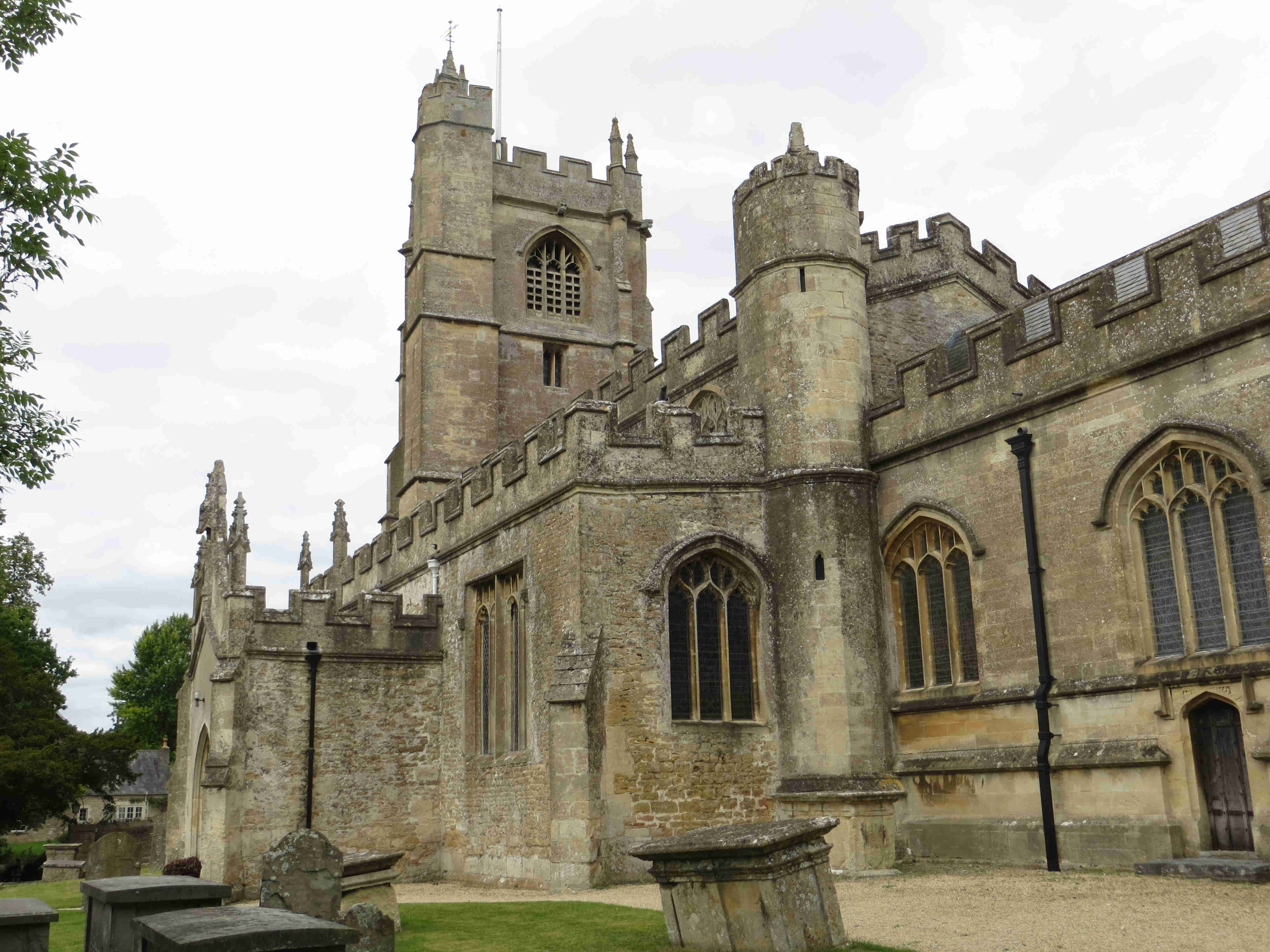
St Julian's church, Wellow
Surviving memorials in the churchyard are on the southern side and include a couple of dozen memorials with some altar/chest tombs. The area north of the church was, in August 2016, fenced off and being used for grazing sheep. To the east of the church are 3 crosses and a dozen headstones arranged in a row. According to the burial register the last burial in the churchyard was on 24-Mar-1900 and the first in the new cemetery on 25-Apr-1900.
Wellow & Shoscombe Cemetery
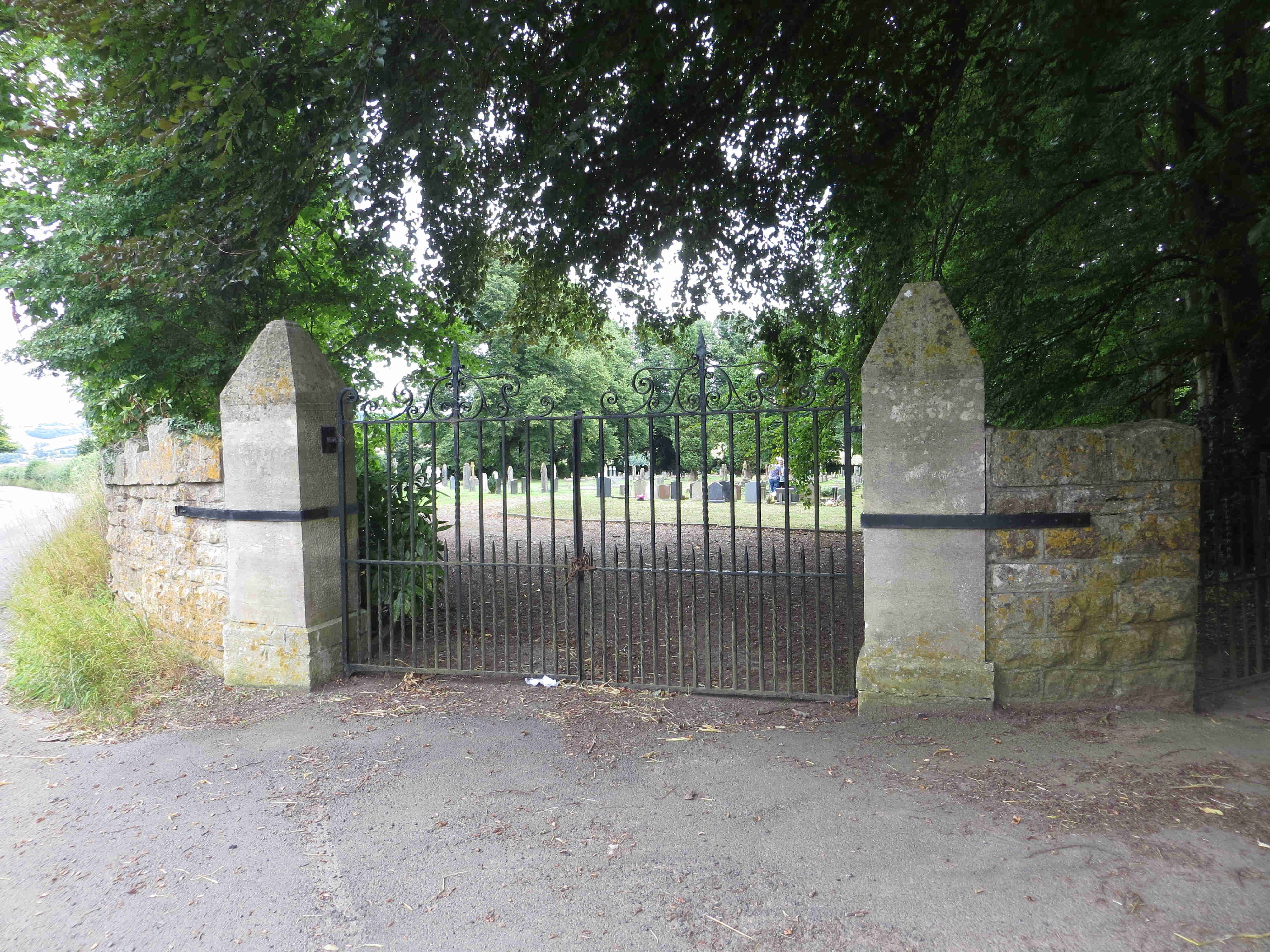
Entrance gates to Wellow & Shoscombe Cemetery
From the Somerset Guardian of at 7 Apr 1900 p5:
The Bishop of Bath and Wells on Wednesday afternoon consecrated the Church of England half of a new burial ground for Wellow, which has been constructed by the Parish Council. Fully 10 years ago the graveyard attached to the parish church was full, and In later years not a single interment has been made without the disturbing of human remains. This state of affairs, which everybody was agreed could not continue, was represented to the Home Office who ordered the closing of the ground, but upon petition suspended the operation of that order till March 31, 1900. The Parish Council were compelled to deal with the crisis and they did so with a dignified leisure often characteristic of even greater bodies. In selecting a site they had to show consideration not only to those who live in the village of Willow proper, but also to the dwellers of Shoscombe which la included in the perish, and those in the hamlets of Single Hill and Double hill, also on the west. An admirable choice was made of an acre and a quarter of land abutting upon the main road about midway between Wellow and Shoscorobe, which In its former entirety was known as "Old England." The site is high standlng and commands a lovely view of three out of four points of the compass. Its approach is everything that could desired. Under the professional advice of Mr. Willcox, of Bath, the county surveyor, the Parish Council have enclosed the cemetery on three sides by a stout wall, and on the other by a fence. There are spaces for over 1,200 graves, and without allowing for more than one interment in each, there la accommodation for many decades. There are a pair of handsome gates, and the top piece, a quarter et an acre in extent, is to laid out In due time with shrubs, which will do much to relieve the present very bare appearance of the whole. The remaining acre has been divided into two down the middle with scrupulous exactness and a broad cinder path will divide the dead of the Church of England from those whose beliefs do not permit them to subscribe to the principles of the Established Church. The provision of such a burial ground is naturally a heavy matter for Wellow, and although a loan of £600 has been obtained the repayments of interest and capital make at least a two-penny rate. The land was purchased from Earl Temple, who met the Council very willingly for £125, and Mr. Tovey, of Midsomer Norton, contracted to lay it out according to specification for £330. At present there is no provision in the matter of a chapel, and the subject is one which has been dividing the Parish Council and still remains undecided. It is necessary to explain that the Council has a Nonconformist majority, and it was resolved at the outset to build one chapel to be at the disposal of all, and, therefore unconsecrated. The cost of Its erection was, we believe allowed for in the loan obtained, and it was certainly included in the specifications for the work, but subsequently the tenderers were asked to leave the chapel out. The Church party desired a chapel which can be consecrated to their own uses, the provision of two buildings for so small a cemetery would appear unnecessary. It will be seen below that the Bishop alluded to the controversy. . . .
The cemetery is about 1km west of the western limit of Wellow along Wellow Lane. Parking is in the lane by the entrance gates. It is a roughly rectangular area with a central path running north-west to south-east. There is no mortuary chapel although a map suggests that, at one time, one was planned. The graves are arranged in a grid with an area close to the gates for cremated remains. Rows A-G form the 'unconsecrated' section and rows J-P the 'consecrated' section.
The cemetery is administered by a burial board and is open for new burials as well as the burial of ashes.